In simple terms, artificial intelligence (AI) is machine-simulated human intelligence. AI technology allows machines to learn, adapt, and perform tasks that previously required humans to do. It has an incredibly broad range of uses, including machine learning, robotics, neural networks, and language processing. Thanks to AI’s ability to learn, it improves continuously. For many, it has already become a part of daily working life, a trend that is set to grow and expand in the coming years.
AI is poised to revolutionise industries, particularly the telecommunications marketplace, by driving efficiency, innovation, and enhanced user experiences. At aql, we see AI as a key enabler to improve our and our customer’s business outcomes. This is why we’ve been designing large language models capable of supporting all elements of aql’s business services and pipelines. Currently, we are leveraging advanced AI technology, specifically generative pre-trained transformers (GPT), to create AI models that can be used for specific purposes.
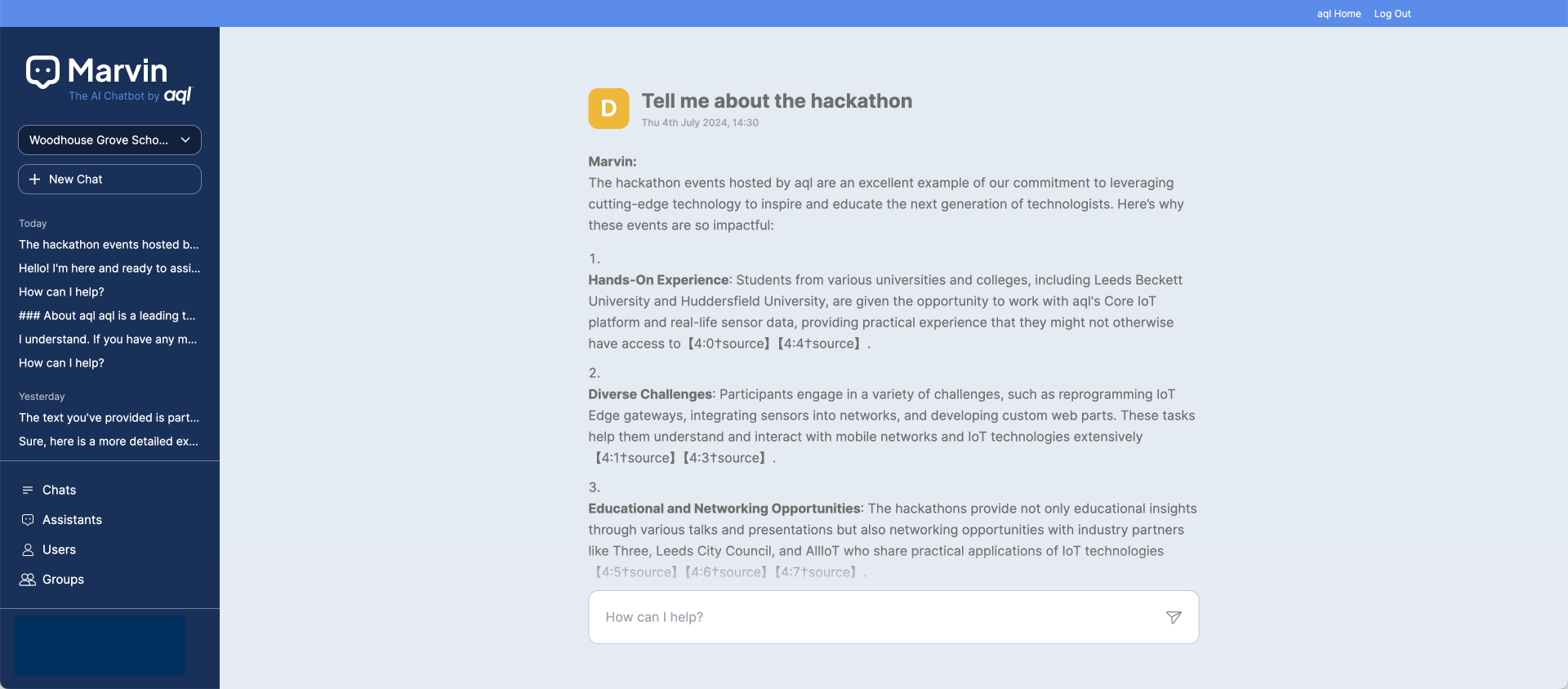
We have recently incorporated AI into several hackathons that we have held. In order to do this, we created an array of GPT AI assistants that were equipped with all required knowledge for the hackathons’ challenges as well as in-depth knowledge of the aql Core IoT platform. The hackathons featured tasks that ranged from enabling live LoRaWAN and NB-IoT sensors, to developing decoders and visualisations through our Core platform, to creating virtual sensors using HTML and integrating InfluxDB and Grafana. Despite having to cater to attendees with a wide variety of technical competencies, the AI assistants’ thorough knowledge of the challenges and the Core IoT platform meant they were able to provide detailed guidance, automate routine tasks such as writing simple code, and enable attendees to get the most out of the event.