
Training AI to kill us all
September 2026

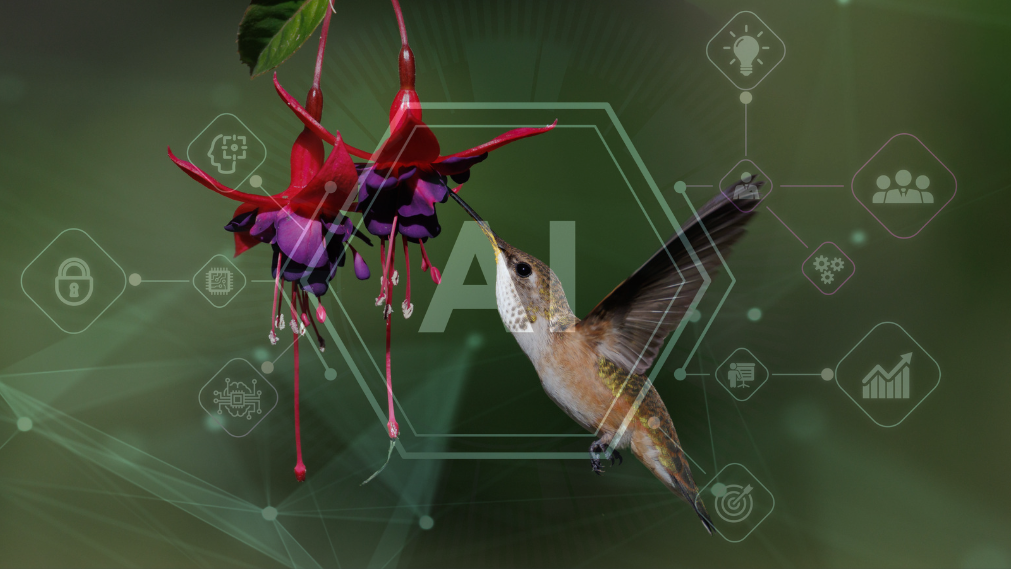

One of the questions I’m asked most often is what the approach should be in terms of using generative AI in the Wildlife Trust federation. As a UK wide, grassroots group of 47 independent charities, deeply rooted in the real world of managing land and reserves, supporting communities and campaigning for nature, AI could help us solve many of the knotty problems we face on a daily basis. So should we embrace it or reject it as it doesn’t meet our ethical and environmental values? My answer is usually the same: it depends.
Across The Wildlife Trusts, we’ve collectively adopted what we call a curious but cautious approach. We want to understand the opportunities AI presents to improve productivity, but we also want to be thoughtful about the risks and implications before rushing headlong into adoption. That philosophy has shaped much of our approach over the past few years. Alongside practical experimentation – often with research partners – into its use creating digital twins for habitat and species ID and for other discrete uses, we’ve developed an AI ethical framework, acceptable use policy and risk assessments. We also provide regular updates and training webinars to help colleagues navigate this rapidly changing landscape, as well as to help them develop strategies for them and their teams.
We have also run workshops with Trusts and our Youth Forum to gain a better understand of colleagues attitudes to AI and how it is being used. None of these approaches are designed to stop people using AI if their Trust decides that it has a place. They’re there to help people use it responsibly, safely and confidently.
We want to encourage the Wildlife Trusts federation to have open conversations and ask probing questions, like: “Should we do this?”, “What are the risks?”, “How does this align with our values and mission?, and “What sits behind the AI tools we’re using every day?” We know that behind every prompt sits an enormous amount of infrastructure – servers, networks, cooling systems and data centres consuming energy and water – on a scale that most of us rarely think about.
Recently, The Wildlife Trusts published A Check for Nature, which raises important questions about the rapid growth of data centres and the pressures they could place on energy systems, land use and water resources. The report argues for a Nature Check approach, ensuring environmental impacts are properly considered before development goes ahead.
If we’re serious about responsible digital transformation and AI, then we need to fully assess the impact on the environment, our colleagues and the communities we support, the data we hold, the decisions we make and increasingly the infrastructure that powers these technologies behind the scenes.
One of the themes in our ethical framework is that technology should support both people and nature. I think that idea becomes even more relevant as AI becomes embedded into everyday work and life. Innovation matters. Productivity matters. But so does understanding the resources consumed to achieve those.
I’ve worked in digital transformation long enough to know that new technologies are often presented as a choice between enthusiasm and scepticism. The debate can become polarised, as if you’re either for them or against them. In reality, the best decisions usually sit somewhere in the middle. Experiment. Learn. Test assumptions. Understand the benefits. Understand the risks. Keep adapting as the evidence changes.
As AI continues to evolve, I suspect that balance will become one of the most important skills any organisation can develop. Not just because it’s good governance, but because it’s how we’ll ensure the technology we adopt supports the positive future we’re trying to create.